What did Virginia Woolf do at 29 Fitzroy Square?
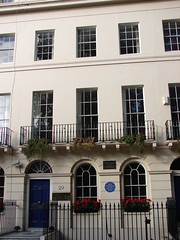
Fitzroy Square Standing before this elegant Georgian townhouse, you're looking at the crucible where Virginia Stephen transformed into Virginia Woolf the writer. Between 1907 and 1911, this address served as both her domestic sanctuary and creative laboratory—a place where she established her independence after her father's death, surrounded by the vibrant intellectual circle of Bloomsbury that gathered in her drawing room.
Here, in the relative freedom of her own household, she wrote prolifically, including early drafts that would evolve into her distinctive modernist voice, while her Thursday evening gatherings became legendary salons where writers, artists, and thinkers debated the radical ideas that would reshape twentieth-century culture. This wasn't merely where Woolf lived; it was where she discovered herself as a writer and claimed the artistic authority that would produce *Mrs.
Discover more stories across London
Collect 1,625+ Blue Plaques with the Legacy app

Dalloway* and *To the Lighthouse*—making this square-fronted building a cornerstone in the architecture of literary modernism.