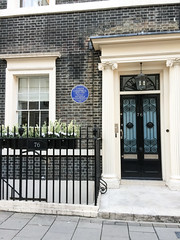
What did Tony Ray-Jones do at 102 Gloucester Place?
Gloucester Place, Westminster Standing before this elegant Marylebone townhouse, you're looking at the studio and home where Tony Ray-Jones developed his distinctive vision of British life during the 1960s—the critical decade when he transformed from a promising young photographer into the artist whose work would define a generation's visual identity. It was within these walls that Ray-Jones, having returned to London after studying and working in America, refined his characteristic style of intimate, quirky observation, capturing the peculiar rituals and character of everyday British society that had captivated him upon his return home.
Here he worked obsessively on the project that would become *A Day Off*, photographing bank holidays, seaside outings, and suburban gatherings with a compassionate eye and darkly comic sensibility that set him apart from his contemporaries. This address represents the crucible of his artistic maturity—the place where a brilliant photographer who would tragically die at just thirty-one created the body of work that continues to define how we see post-war Britain, making 102 Gloucester Place not just a studio, but the birthplace of one of photography's most original visions.
Discover more stories across London
Collect 1,625+ Blue Plaques with the Legacy app