
What did Seraphine Astafieva do at 152 King's Road?
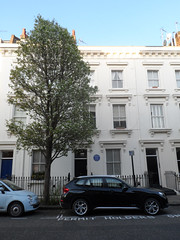
King's Road: Where Ballet Found Its English Home At 152 King's Road, Princess Seraphine Astafieva transformed a fashionable Kensington townhouse into London's most influential ballet studio during the 1920s and early 1930s, establishing herself as the vital bridge between Russian imperial technique and the emerging British ballet scene. Having fled Russia after the Revolution, Astafieva chose this prestigious address deliberately—King's Road was already synonymous with artistic innovation—and from here she taught the next generation of British dancers, including the young Marie Rambert and countless others who would shape the nation's dance culture.
Within these walls, she maintained the pure Cecchetti method she had learned in St. Petersburg, preserving classical technique even as she encouraged her students to find their own artistic voices, creating an atmosphere where rigorous Russian training met British pragmatism. When you stand before this blue plaque today, you're marking not just a residence but a crucial cultural crossroads—the exact spot where Russian ballet, threatened with extinction after the Revolution, took root in British soil and flourished into an entirely new national tradition.
Discover more stories across London
Collect 1,625+ Blue Plaques with the Legacy app


.jpg?width=250)
